Why Neon Makes Tokyo Unique
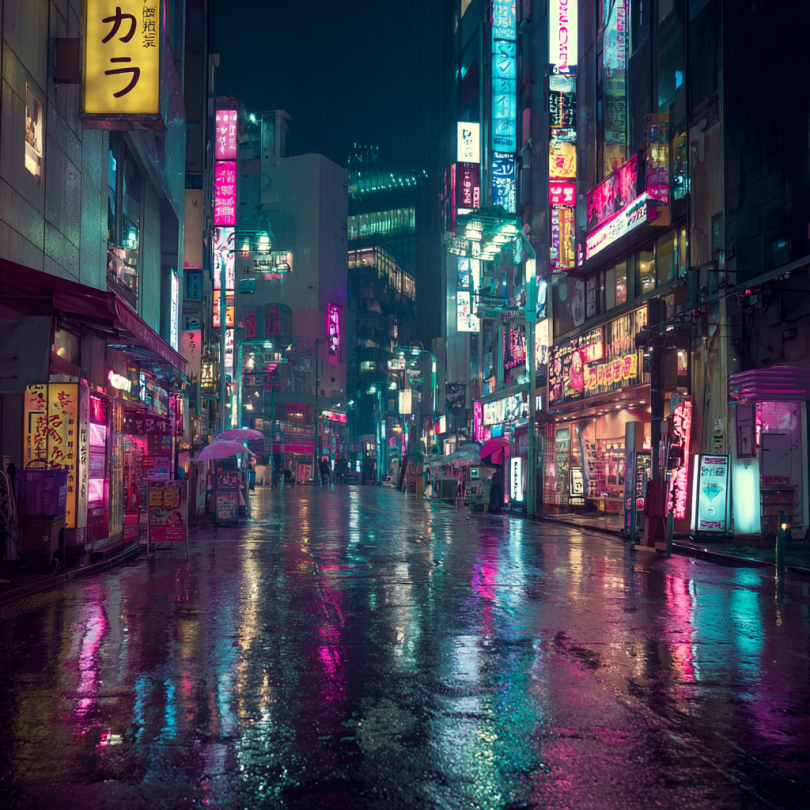
Tokyo’s neon is more than just flashy advertisements. It’s a reflection of culture, history, and life in motion. Neon illuminates the streets and contrasts against wet asphalt after rain, creating reflections that amplify the city’s vibrancy. Unlike other cities where neon might feel like decoration, in Tokyo, it interacts dynamically with people, movement, and architecture, making every frame a story.
For photographers, this means:
Endless reflections for artistic shots.
Dynamic compositions with movement and light trails.
Vibrant color contrasts that are hard to replicate elsewhere.
Shibuya: The Heartbeat of Neon
Shibuya Crossing is one of the busiest pedestrian intersections in the world. From above or street level, it’s a spectacle of lights, colors, and movement.
Night Photography Tips: Use a tripod or a high shutter speed to either freeze the chaos or capture streaking light trails.
Angles: Elevated points, such as the Shibuya Station overpass, allow you to capture the full scale of the crossing.
Reflections: After rain, the streets reflect the neon billboards, multiplying the colors and creating cinematic shots.
Shibuya also offers countless alleyways, side streets, and tiny cafés lit with soft neon signage. These spaces are perfect for intimate urban photography, away from the chaotic main streets.
Shinjuku: Neon Alleyways and Vibrant Streets
Shinjuku is another iconic neon destination, known for its dense collection of streets that glow with signs, advertisements, and shop lights.
Golden Spots: Omoide Yokocho and Golden Gai are small alleyways packed with bars, restaurants, and signage. These narrow streets allow you to play with perspective, framing, and depth.
Composition Tips: Include a single subject walking through the alley to add scale and narrative.
Lighting: The mixture of warm and cool neon lights creates unique color contrasts. Experiment with white balance to capture the atmosphere naturally.
Akihabara: Neon and Tech Culture
For a slightly different vibe, Akihabara’s neon illuminates the world of electronics, gaming, and anime. Here, the signs are larger, brighter, and more colorful, creating a playful, almost surreal environment.
Detail Shots: Focus on signage, reflections, or crowds interacting with light.
Wide Shots: Capture streets filled with glowing advertisements to emphasize scale.
Time of Day: Evening through late night offers the best neon intensity while still having some pedestrian activity.
Neon Reflections and Weather
Tokyo’s neon photography is especially magical after rain. Wet streets mirror the vibrant lights, giving images depth and texture. Even small puddles can produce striking compositions.
Tip: Look for low-angle shots near puddles or reflective surfaces to double the neon impact.
Fog or Mist: Early evening mist can soften lights and create a moody, cinematic feel.
Gear Recommendations
While you can capture Tokyo’s neon with a smartphone, certain equipment can elevate your photography:
Tripod: Essential for long exposures and stable night shots.
Wide-angle lens: Perfect for capturing streets, crossings, and alleys in full perspective.
Prime lens (50mm or 35mm): Ideal for detailed shots and capturing neon in tighter spaces.
Extra batteries & memory cards: Tokyo’s neon streets are endless; you’ll shoot a lot.
Photography Techniques for Neon Shots
Long Exposure: Capture moving cars and pedestrians as streaks of light for dynamic compositions.
Low Angle Shots: Amplify reflections on wet streets or puddles for cinematic effect.
Framing: Use signs, poles, or shop entrances to frame subjects creatively.
Color Balance: Neon lights have strong color casts. Experiment with white balance to get either a natural look or an artistic tone.
Motion Blur: Combine static subjects with blurred motion for energy and storytelling.
Hidden Neon Spots Off the Beaten Path
While Shibuya, Shinjuku, and Akihabara are famous, Tokyo is full of smaller neon-filled streets:
Golden Gai Alleys: Tiny bars, lanterns, and neon signage make perfect intimate street scenes.
Kagurazaka: A traditional district with modern neon signage blending with old cobblestones.
Shimo-Kitazawa: Hip streets with neon shop signs, quirky cafés, and nightlife energy.
Ochanomizu and Jimbocho: Small streets with neon signs over bookstores and music shops, great for offbeat shots.
Integrating People in Neon Photography
Neon photography is not just about the lights—it’s about life. Including people adds scale and narrative:
Pedestrians: Capture them walking, waiting, or interacting with neon-lit storefronts.
Reflections: People reflected in puddles or glass surfaces enhance depth.
Street Performers & Vendors: These spontaneous moments give photos authenticity.
Composition Tips for Maximum Impact
Leading Lines: Use streets, crosswalks, or alleyways to guide the eye.
Symmetry & Geometry: Neon signs and grids create strong compositional elements.
Layering: Frame neon signs, people, and reflections together to create depth.
Negative Space: Dark areas contrast with neon brightness for dramatic effect.
Best Times for Shooting Neon in Tokyo
Twilight (Blue Hour): The sky retains a deep blue tone, complementing the neon colors.
Night (8 PM–Midnight): Maximum neon visibility with active streets.
After Rain: Enhanced reflections and mood.
Weekdays vs Weekends: Weekdays tend to be less crowded, allowing cleaner compositions.
Must-Have Shots Checklist
Shibuya Crossing from above or street level.
Golden Gai alley with lanterns and neon glow.
Reflections in puddles of neon-lit streets in Shinjuku.
Akihabara billboards with movement and crowds.
Low-angle street shots emphasizing reflections and light streaks.
Candid shots of pedestrians interacting with neon signage.
Quirky offbeat streets like Shimo-Kitazawa or Kagurazaka.
Final Thoughts
Tokyo in neon is more than a visual spectacle—it’s a sensory experience. The city’s lights, reflections, and movement offer endless creative possibilities. To capture its essence, explore both famous and lesser-known streets, experiment with angles, and embrace the unpredictability of urban life.
The neon city rewards patience and curiosity. Small alleys can yield magical shots, reflections can tell hidden stories, and a single lighted sign can create a scene worthy of a film still. By combining preparation with spontaneity, Tokyo transforms into a photographer’s dream—a place where every frame pulses with energy and every night offers a new visual adventure.