Why Iceland Feels Like a Wild Postcard
Unlike cities, Iceland’s landscapes feel untouched. The vastness of glaciers, lava fields, and fjords creates a sense of scale that challenges the photographer to capture both intimacy and enormity. Every light change, every weather shift, turns a familiar landscape into something entirely new.
For photographers, this means:
Constantly evolving scenery—no two shots are ever the same.
Dramatic skies, from pastel dawns to stormy clouds.
Opportunities for both wide-angle panoramas and detailed close-ups.
Waterfalls: Nature’s Dramatic Canvas
Iceland is famous for waterfalls, each with its own personality.
Seljalandsfoss
One of Iceland’s most photographed waterfalls, Seljalandsfoss is unique because you can walk behind it.
Best time to shoot: Sunrise for soft light and minimal crowds.
Photography tip: Use a wide-angle lens to capture both the waterfall and the landscape behind it. Don’t forget to bring a rain cover for your camera—the mist is strong.
Skógafoss
Skógafoss is wider and more powerful, often creating rainbows on sunny days.
Composition tip: Include the stairs to the right of the falls for perspective. A lone figure climbing adds scale.
Golden hour: Evening light creates a warm glow on the water and cliffside.
Hidden Waterfalls
Iceland is full of less-famous waterfalls tucked away in valleys and along hiking trails. These spots are quieter and perfect for capturing nature without crowds. Keep an eye on local hiking maps or guides for secret gems.
Glaciers and Ice Landscapes
Iceland’s glaciers are mesmerizing in their size, texture, and ever-changing patterns.
Jökulsárlón Glacier Lagoon
Floating icebergs create a surreal, mirrored landscape.
Photography tip: Shoot during sunrise or sunset to capture pastel reflections on the ice.
Details: Zoom in on textures—cracks, ice caves, and reflections create dramatic shots.
Diamond Beach
Adjacent to the lagoon, ice chunks wash ashore on black sand, glistening like gems.
Composition idea: Contrast the bright ice with the dark volcanic sand.
Tip: Low-angle shots enhance reflections and textures.
Vatnajökull Glacier
Europe’s largest glacier offers massive ice fields and dramatic mountain backdrops.
Safety: Always use a guide when exploring glaciers.
Photography tip: Use wide-angle lenses to capture the scale; add hikers or climbers for perspective.
Volcanic Landscapes and Lava Fields
Iceland’s volcanic origins create dramatic and textured landscapes.
Reynisfjara Black Sand Beach: Towering basalt columns, black sands, and roaring waves.
Tip: Capture patterns in the rocks and the contrast with white foam.
Fagradalsfjall Lava Fields: Recently active lava flows create rugged textures.
Photography tip: Use early morning light to emphasize shadows and contours.
These landscapes are raw, alien, and perfect for photography that tells a story of the earth’s power.
Northern Lights: Nature’s Neon Show
From September to April, Iceland offers opportunities to capture the aurora borealis.
Best locations: Away from city lights—Thingvellir National Park, Vik, or remote fjords.
Camera settings: Long exposures, tripod, and wide-angle lenses are essential.
Composition tips: Include foreground elements like waterfalls, mountains, or icebergs to create depth.
The aurora turns Icelandic nights into a living, moving postcard—perfect for long-exposure experiments.
Practical Tips for Iceland Photography
Timing Matters
Summer offers long golden hours; winter offers auroras and snowy landscapes.
Early mornings and late evenings reduce crowds at popular spots.
Gear Essentials
Wide-angle lens for landscapes.
Tripod for long exposures and aurora photography.
Waterproof gear and lens covers—rain, mist, and sea spray are everywhere.
Extra batteries—cold weather drains them faster.
Weather and Light
Iceland’s weather changes fast. Clouds, sun, and storms can appear in minutes, creating dynamic lighting.
Embrace unexpected conditions—they often make the best photos.
Composition Tricks
Use leading lines from rivers, lava flows, or pathways.
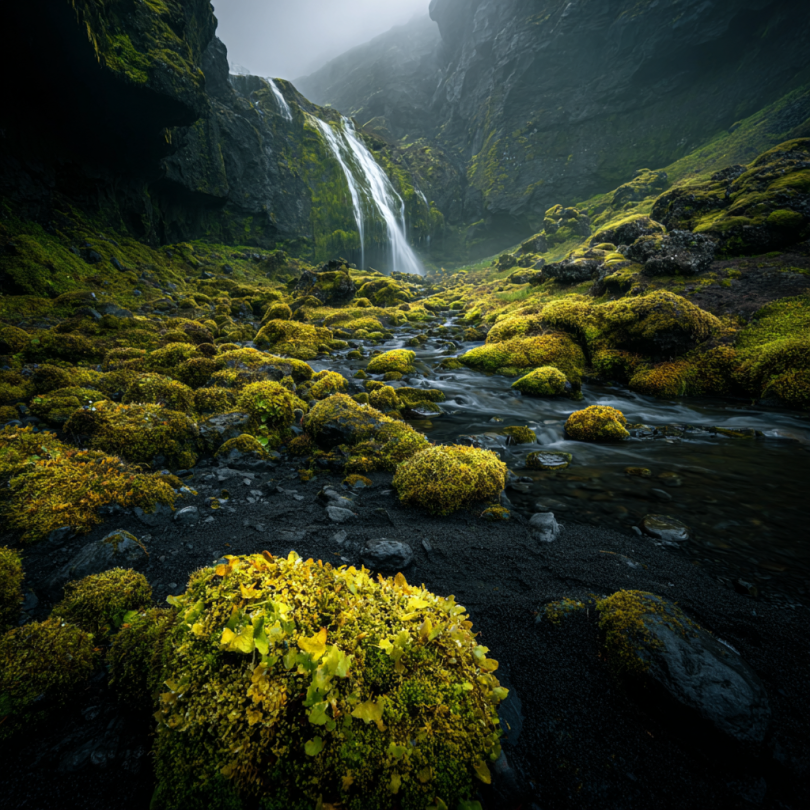
Incorporate foreground elements like rocks, ice, or moss for depth.
Capture both scale and detail: wide shots show the grandeur; close-ups reveal textures.
Hidden Iceland: Off the Beaten Path
Hraunfossar: Water streaming through lava fields, soft and serene.
Gjáin: A secluded green valley with waterfalls, perfect for intimate nature shots.
Hornstrandir Peninsula: Remote fjords and cliffs; ideal for dramatic seascapes and wildlife photography.
Exploring less-known areas gives your shots a unique edge, avoiding the typical postcard clichés while still capturing Iceland’s raw beauty.
Must-Have Shots Checklist
Seljalandsfoss from behind with sunrise reflections.
Skógafoss with a rainbow and a figure for scale.
Jökulsárlón Lagoon mirrored icebergs.
Diamond Beach low-angle shot highlighting black sand contrasts.
Reynisfjara basalt columns with crashing waves.
Lava fields with early morning shadows.
Northern lights over a glacier or waterfall.
Hidden waterfalls or valleys for secluded compositions.
Final Thoughts
Iceland is more than a destination—it’s a living, breathing landscape that changes with every step, every light shift, and every weather event. Its combination of waterfalls, glaciers, volcanic terrain, and auroras makes it feel like a wild postcard, ready to be captured by anyone willing to explore.
The key to photographing Iceland is patience, curiosity, and preparation. Whether you’re chasing waterfalls, glacial reflections, or auroras in the night sky, each frame is an opportunity to tell a story of wild, untamed beauty. Iceland challenges and inspires, rewarding photographers with images that feel both timeless and extraordinary.